Sprinkler System Winterization
In Utah County and Salt Lake County
Winterization scheduling opens September 1
What is a Winterization?
Why you should blow out your sprinkler system in Utah
In Utah County and Salt Lake County, winter temperatures can be unpredictable: some years we have warm winters, and some years they are unbearably cold. When winter weather gets bad, the pipes in your sprinkler system can burst, causing leaks and damage to your home. A professional sprinkler winterization is the best way to prevent this issue. We turn off your water supply and blow out all of your sprinkler lines with high-pressure air to remove as much water as possible.
Some homeowners choose to winterize their sprinkler systems themselves either by turning them off and allowing them to drain or blowing them out with a small air compressor. Hiring a professional is more convenient, more thorough, and will give you peace of mind compared to doing it yourself.

When to Blow Out Sprinklers
When should I turn off my sprinkler system for winter?
Lawn sprinkler systems need to be winterized before the first hard freeze of the year! Above-ground system components like backflow preventers are especially at risk of cracking and freezing once temperatures drop below 32 degrees Fahrenheit. The "frost line" (how deep freezing temperatures penetrate into the ground) differs from state to state. In northern Utah, freezing temperatures can penetrate as deep at 30 inches, which means sprinkler lines are at risk. In some areas of the country, homeowners with lawn sprinkler systems may choose to skip winterization all together, since temperatures rarely get below freezing. However, in northern Utah, it is a non-negotiable step in system maintenance. The time of winterization varies depending on weather, but we perform the majority of our winterizations during the month of October.
Steps to Winterize a Sprinkler System
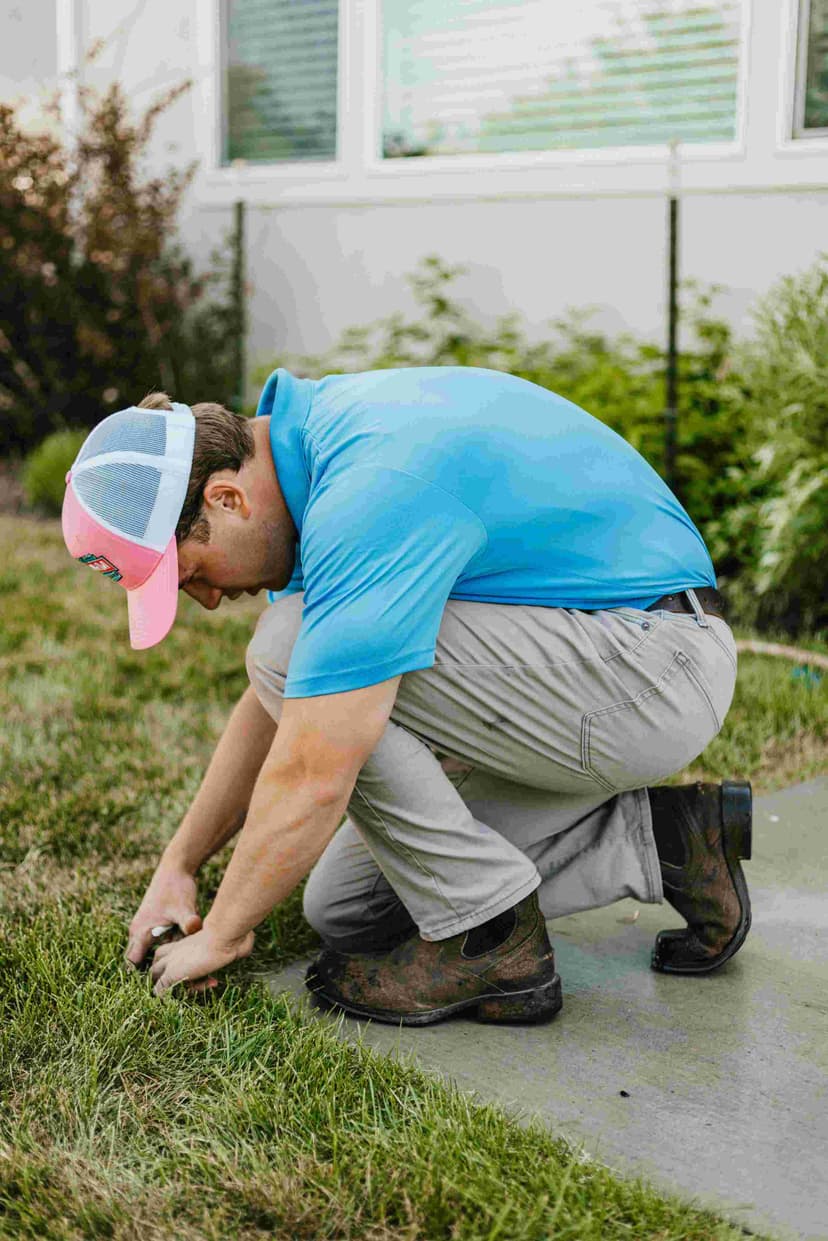
- Shut off the water — For most homeowners, the main shutoff valve for a sprinkler system is either in their basement or in the yard near the home's water meter. Some valves are self-draining (stop and waste valves) while others are not. It is important to know which type you have. In pressurized irrigation (secondary water) cities like Spanish Fork, Pleasant Grove, Alpine, and Bluffdale, the city will shut off the water as well, but it is good to shut it off at your own system for safety. Most cities shut off secondary water on October 15. We recommend winterizing your system between October 1-31.
- Winterize the backflow preventer — For lawn irrigation systems running on culinary water, backflow preventers are generally required by local building codes. These come in various shapes and sizes and can be above ground or below ground. The purpose of a backflow preventer is to prevent contaminated water in the irrigation system from flowing back into the drinking water supply. Each backflow preventer is different in winterization steps, so it is best to find an online manufacturer guide for your specific model. Most follow a few main steps: shut off the water supply, shut off the outlet valve, open drains and test cocks, blow out the pipes, and set valves to half-open for winter. Important note: systems running on secondary water (pressurized irrigation) do not need backflow prevention, so this step can be skipped depending on your city.
- Blow out pipes, valves, and sprinkler heads — Blow out each sprinkler station, one at a time, by hooking an air compressor into the main line and running a sprinkler cycle for about 5 minutes per station. An air compressor can attach through a spigot or winterization port. Some systems have automatic drains, but many contractors advise against relying on these because they can fail. On most residential systems, a small 30-gallon air compressor is sufficient. Backflow preventer outlet valves should be closed during this process to avoid damaging internal components.
- Set controller to off position — Some controllers, such as Rachio controllers, call this "hibernation mode." This stops electrical signals from flowing to the valves. However, if you forgot to turn the controller off, it is okay. Just make sure the water is turned off! Turning off the sprinkler system from the controller does not prevent freeze damage—the water supply itself needs to be turned off.
- Keep the water off until it gets warm again — There is no reason to water your lawn between October and March. Utah landscapes generally use cool-season grass like Kentucky bluegrass and tall fescue. To avoid freeze damage or wasting water, don't turn on your sprinklers until it warms up again. The best time to turn your sprinklers on in Utah is in April.
Cost to Blow out Sprinklers in Utah
Price of Sprinkler Winterization
If you do it yourself, a sprinkler blow out takes 1-2 hours and costs only as much as the air compressor you use, whether you buy or rent. Keep in mind that smaller air compressors are less thorough and slower for blowing out your sprinkler lines.
If you hire a professional, expect to pay professional rates! If you are looking for a company that will do a thorough job, provide excellent customer service, and send only qualified technicians to your property, call Storm Sprinklers today. In 2026, we charge $175 for an irrigation blow-out (up to 8 zones), or $149 for members of our Storm Shield maintenance plan, which also receive a spring tune-up. Systems with more than 8 zones add $15 per additional zone. For scheduling convenience, 5-year warranty protection, and a ton of other benefits, most of our customers prefer Storm Shield memberships.
$175
Standard Price
Service Area
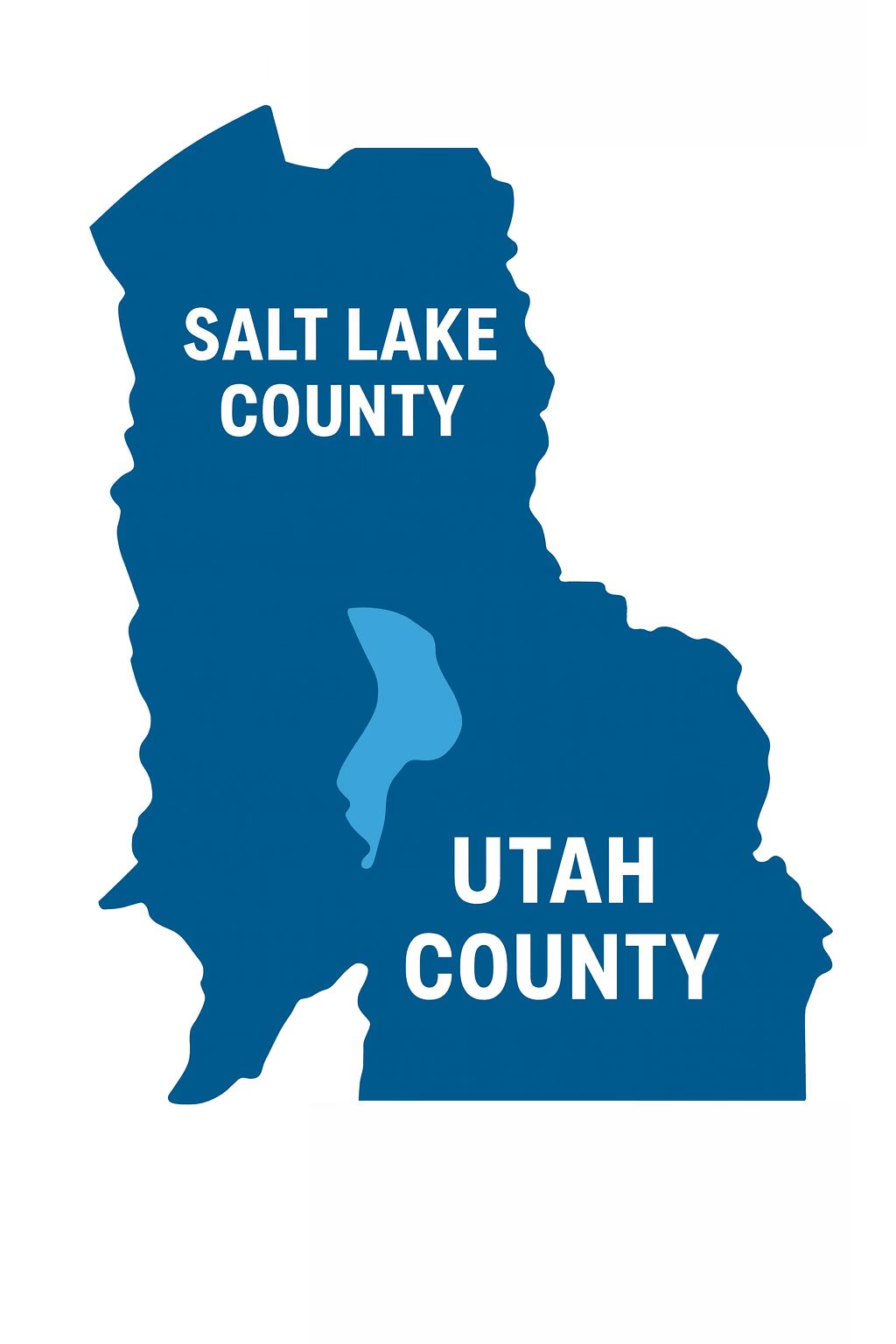
We service landscape irrigation systems in Utah County and Salt Lake County. Select your city from the list below to see local pricing, availability, and service details.
Utah County
Sprinkler System Maintenance Plans
Storm Shield Lawn Sprinkler Maintenance Plan
Protect your Investment with 5-Year Warranties
Bundle & Save to protect your system!
This winterization is included in Storm Shield Essential! $399 → $174/year for the full plan
Prices starting at $399/year
Compare Plans- Waived Service & Emergency Fees
- Preferred Scheduling
- Spring System Activation
- Sprinkler System Warranty
- Fall System Winterization
Frequently Asked Questions
Can I winterize my system myself?
Of course you can! Whether you choose to do this yourself depends on a few factors: 1) Time. Do you have an hour or two to devote to this project? 2) Capacity. Do you own an air compressor and attachments to fit it to your sprinkler system? 3) Warranty. Are you interested in our 5-year warranty from Storm Sprinklers on either a repair or new installation? Our warranties require winterization with our company to be maintained from season to season. If you are not concerned about these potential obstacles, we recommend winterizing your sprinklers on your own to save money!
How does freezing water damage irrigation systems?
When water freezes, it expands in size by 9%. When a pipe is full of water and the water freezes, pipes crack. This is true for all types of pipe: metal, PVC, drip tube, polyethylene, and copper. This also includes fixtures such as filters, valves, sprinkler heads, and backflow preventers. By blowing out the sprinkler system with pressurized air, we ensure no damage to the system when freezing temperatures come.
When should I blow out my lawn sprinkler system?
The best time to blow out your landscape irrigation pipes and sprinkler heads is in October. For specific information on sprinkler shutoff timing in your city, go to our comprehensive scheduling guide. While some prefer to wait until the last minute and keep watering until November, prices are higher and spots are fewer in November. It is even okay to winterize your sprinklers in September!
What areas do you service?
We service all of Utah County and Salt Lake County, from Santaquin to Salt Lake City. This includes areas like Provo, Spanish Fork, Mapleton, Lehi, Bluffdale, Sandy, Draper, Cottonwood Heights, Kearns, Riverton, and Saratoga Springs, as well as many others. We are a locally owned and operated business dedicated to improving Utah homeowners' experiences with local sprinkler companies.
What happens if I don't winterize my system?
When you fail to winterize your sprinkler system in northern Utah, underground sprinkler pipes and fittings that are full of water will freeze and crack, causing leaks in the spring. In the worst of cases, this can compromise irrigation lines for hundreds of feet, leading to massive repair costs in the spring. Failure to winterize is one of the most common causes of expensive repairs we see in the spring, especially on backflow preventers.
What other tips do you have for sprinkler blow outs?
Drip irrigation tubes are common in garden beds, but since these have a controlled flow rate at each emitter, the fastest way to winterize a drip tube is to find one end of it and remove the cap or kink to completely open up air flow. With the right fittings, you can even hook the air compressor up to a sprinkler head and blow backwards through the sprinkler valve into other lines—though backwards flow through a valve can choke the air flow. The goal of winterization is to get as much water as you can out of the pipes, but you don't have to get it all, because water only expands 9% in volume when it freezes. Rotary nozzles like MP rotators take longer to winterize. Smart sprinkler controllers from brands like Rachio, Hunter, B-Hyve, and Rainbird make winterizations easy because you don't have to go back and forth from the timer to the lawn.
Easy Scheduling
Online Booking, 24/7 Phones

Ready to book your blow out service and protect your irrigation system? Your appointment is only a few clicks away. We offer online booking and we have AI agents to answer after-hours phone calls, so you can get on the schedule in just a couple of minutes, no matter your preferred method of booking. Looking for a more human booking experience? We've got that too: call during normal business hours and our friendly staff will leave you on cloud nine. Scheduling a sprinkler winterization has never been so easy. Don't wait: spots fill fast and we only have a limited number of spots available for the winter! Call now to be placed on our schedule.
Winterization scheduling opens September 1
Get a quote now