For most homeowners along the Wasatch Front, we recommend winterizing sprinkler systems in late September. A lot of people wait until the last possible moment, usually when the first freeze shows up in the forecast. That can work, but it creates unnecessary risk. By late September, Utah lawns need very little water compared with summer, nighttime temperatures are already getting colder, and there is usually little benefit to keeping the sprinkler system running for several more weeks.
At Storm Sprinklers, we have winterized hundreds of sprinkler systems throughout Utah County and Salt Lake County, and we see the consequences every year when homeowners wait too long. For the full blowout process, compressor size, and cost, see our complete sprinkler winterization guide.
TL;DR
Schedule a sprinkler blowout in late September. Shutting the water off is not winterization. Secondary water shutoff is not winterization either. If a freeze is already in the forecast, turn the irrigation supply off, run a brief cycle, then book a proper winterization immediately.
Why Late September?
By late September, most established Utah lawns only need occasional watering. In many cases, watering once a week or even shutting the system down completely is fine. Our sprinkler scheduling guide covers how little water most Wasatch Front lawns need as nights cool.
If you turn your sprinklers off a little early, your lawn may simply begin going dormant earlier. That is generally much less expensive than risking a frozen irrigation system. The bigger issue is that Utah's first freeze can vary significantly from year to year. In 2025, we were able to continue winterizing systems into November before serious freezing weather arrived. In 2024, freezing temperatures showed up around the second week of October. That variability is why we do not recommend trying to predict the exact last safe day.
Do Sprinklers Freeze at 32 Degrees?
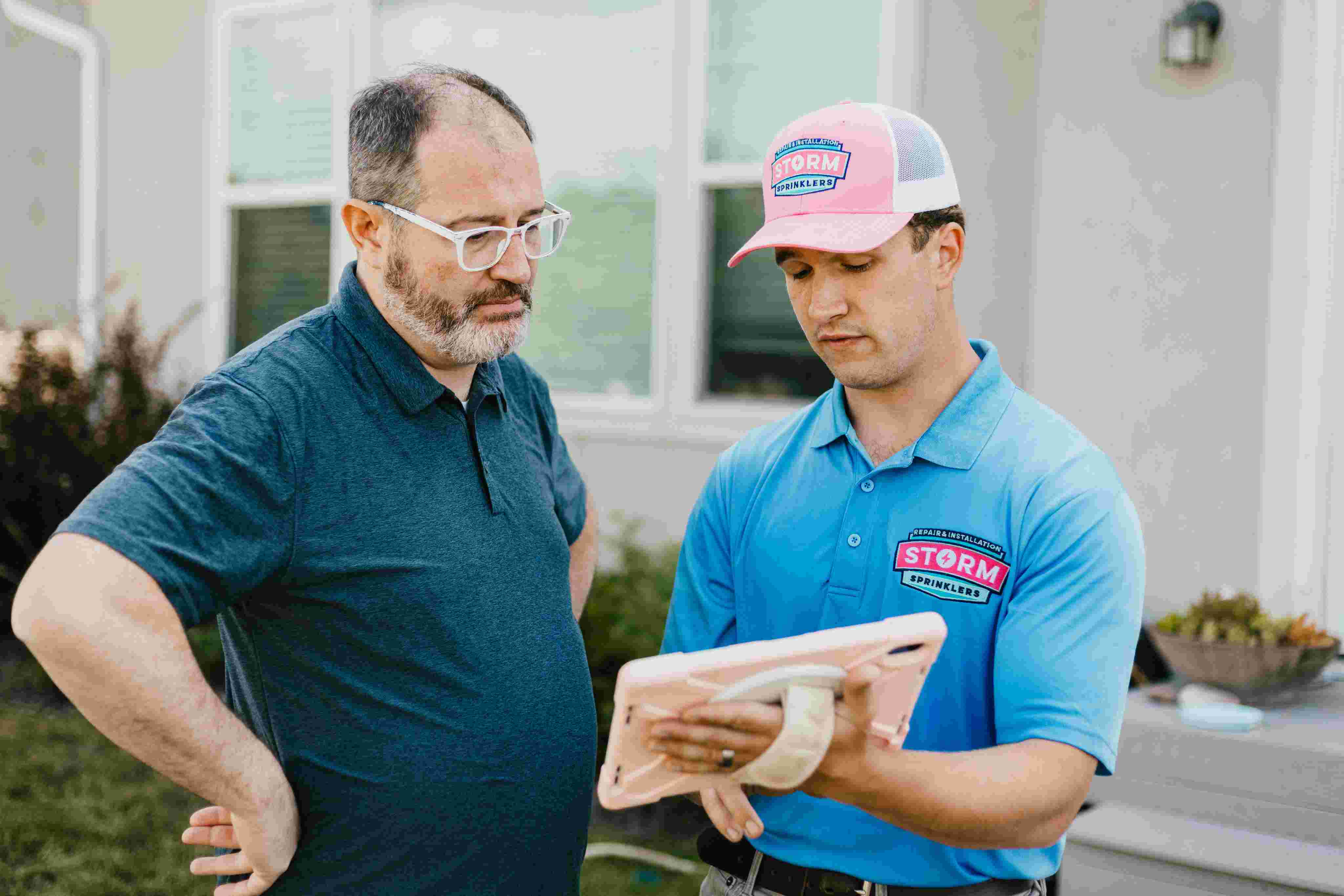
Freeze damage is not guaranteed the second temperatures touch 32°F, but that is when the risk begins. Every year, once temperatures start reaching freezing, we begin getting calls about damaged backflow preventers and other exposed irrigation components. Above-ground components usually freeze before underground sprinkler lines because they have less insulation from the surrounding soil. Backflow preventers, filters, valve manifolds, and exposed piping are particularly vulnerable. A short overnight freeze may not damage anything, while a longer or harder freeze is much more concerning. The safest approach is simply to have the system winterized before freezing weather becomes part of the forecast.
Is Shutting Off the Sprinkler Water Enough?
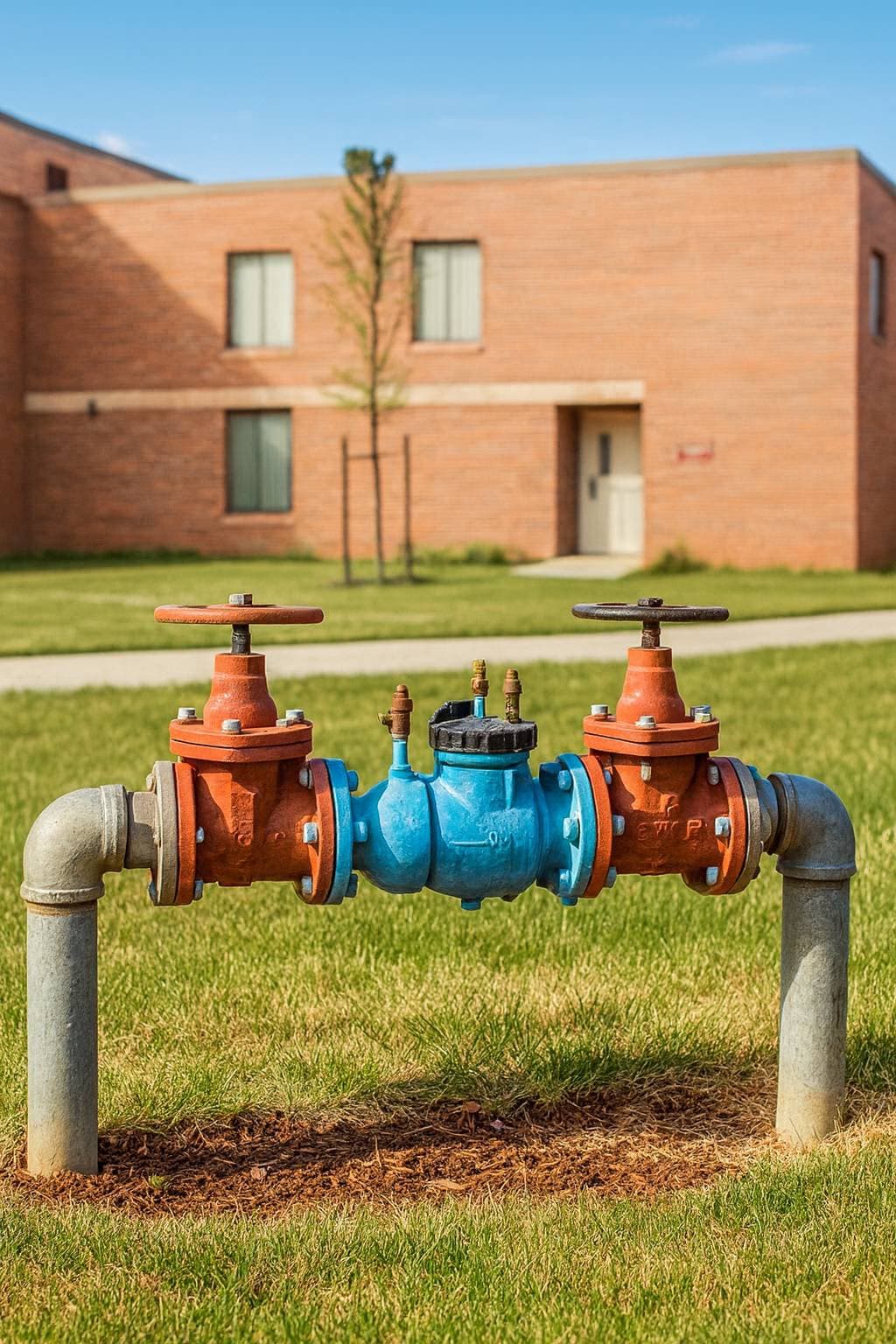
Shutting off the sprinkler water is not enough, and this is one of the most common mistakes we see. Turning off the irrigation water supply stops additional water from entering the system, but it does not remove water already trapped inside sprinkler lines, valves, filters, or the backflow preventer. We repair systems every spring where homeowners believed shutting the water off was sufficient. See our sprinkler repair page if you already have freeze damage, or the complete winterization guide for what a proper blowout includes.
One particularly expensive case involved a property with a failed irrigation shutoff valve. The system was not properly winterized, a valve manifold froze and cracked, and the resulting leak flooded the homeowner's basement. Between the irrigation repairs and water damage, the total bill was around $15,000. That is an extreme example, but even normal freeze repairs usually cost much more than a winterization. If the shutoff will not isolate the yard, get the stop and waste valve fixed before freeze weather arrives.
What If You Haven't Winterized and a Freeze Is Coming?
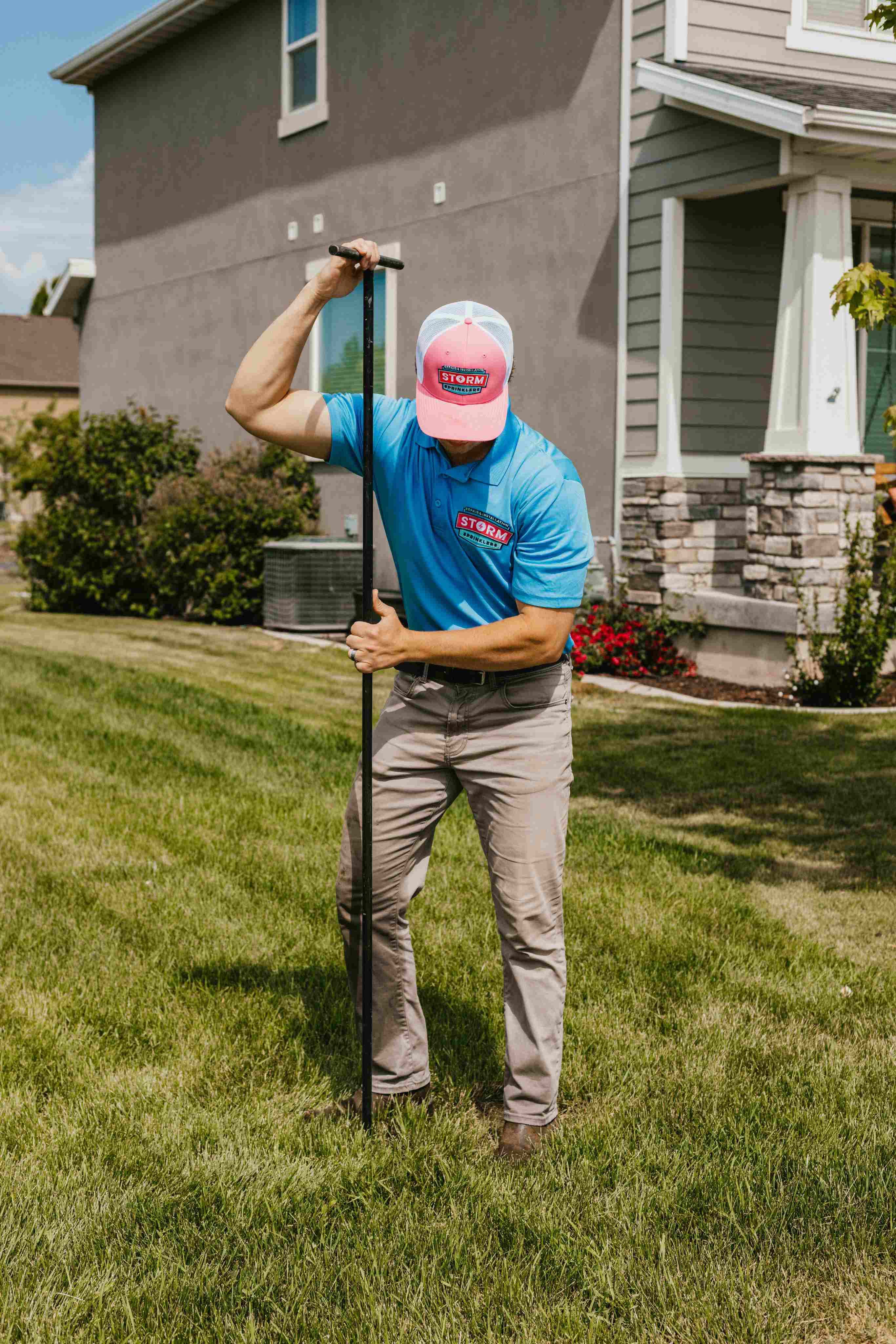
If temperatures are expected to drop below freezing and your sprinklers are still active, the first thing you should do is shut off the irrigation water supply. After shutting the water off, run the sprinkler system briefly. This can help relieve pressure and distribute some of the remaining water instead of leaving sections of the system completely full and pressurized. This is not a substitute for a proper sprinkler blowout, and you should still schedule a winterization as soon as possible. We have successfully winterized systems as late as November, but whether damage has already occurred depends entirely on the weather and the design of the irrigation system.
Should Secondary Water Systems Be Winterized?
Yes, they should. Some Utah homeowners assume that once their city or irrigation district shuts off secondary water for the season, their sprinkler system is automatically winterized, but it is not. Water can still remain inside the homeowner's pipes, filters, valves, and sprinkler heads. Secondary systems should still be properly drained or blown out. How secondary water works—and typical city on/off dates—is covered in our pressurized irrigation guide. The process is not dramatically different from a culinary-water sprinkler system. On many secondary systems, a compressor can be connected near the filter. Culinary systems commonly use a connection near the backflow preventer or another dedicated blowout port.
The Best Time to Schedule
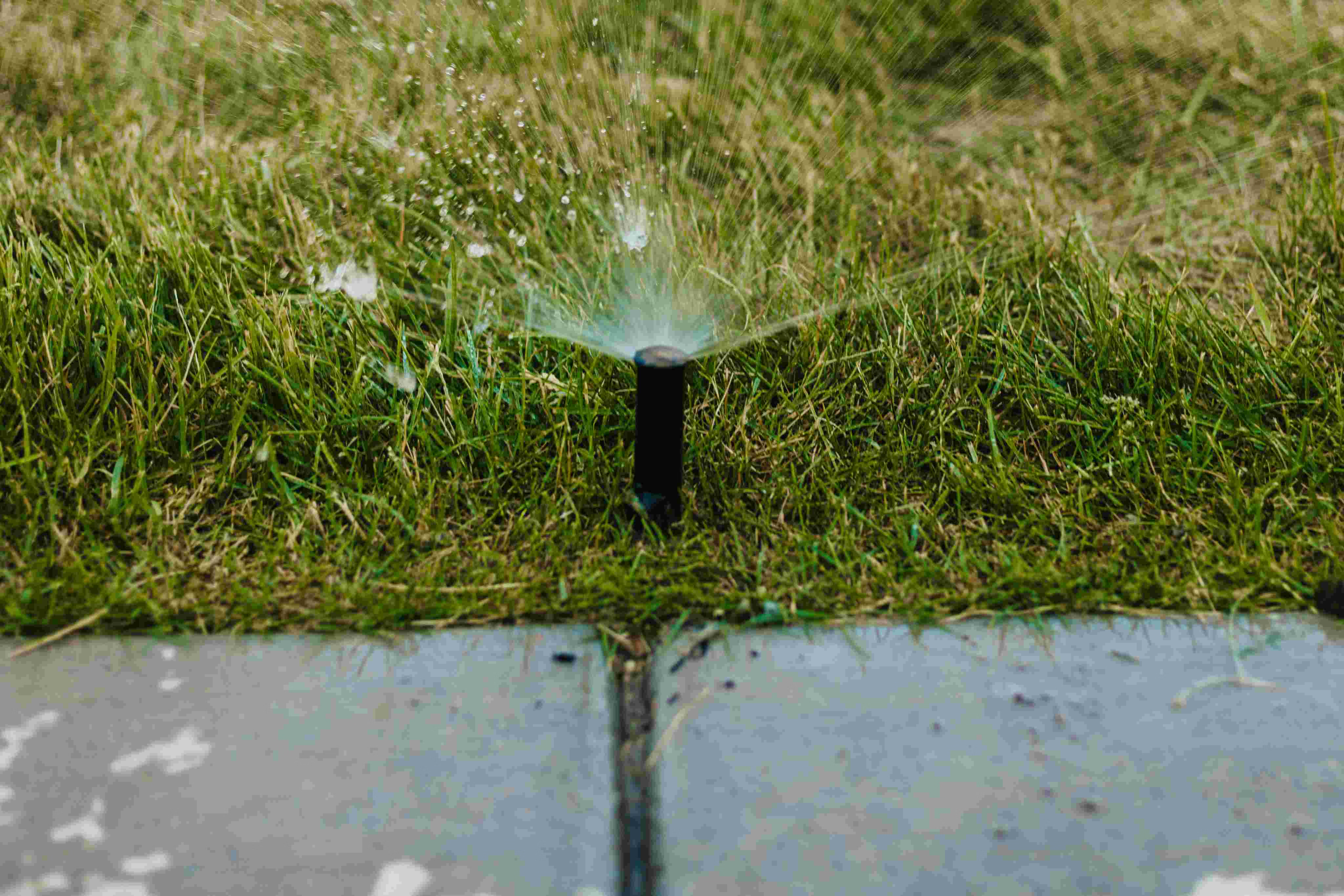
For homeowners in Provo, Orem, Lehi, American Fork, Pleasant Grove, Saratoga Springs, Eagle Mountain, Spanish Fork, Draper, Sandy, South Jordan, Riverton, Murray, Salt Lake City, and surrounding areas, late September is generally the safest time to schedule sprinkler winterization. You may be able to wait until October or even November in a warm year. The problem is that you do not know in September what kind of fall Utah is going to have. Once your lawn no longer needs regular summer watering, there is very little upside to keeping the irrigation system active while temperatures continue to fall. Check typical city irrigation dates with the tool below, then reserve a winterization week before the rush.
Find Your Sprinkler Season Dates
Select your city to see when sprinklers typically turn on and off.
Frequently Asked Questions
When should you winterize sprinklers in Utah?
For most homeowners along the Wasatch Front, late September is the safest time. Lawns need very little water by then, nights are already colder, and waiting for the first freeze forecast creates unnecessary risk.
Do sprinklers freeze at 32 degrees?
Freeze damage is not guaranteed the second temperatures touch 32°F, but that is when the risk begins. Above-ground parts such as backflow preventers, filters, valve manifolds, and exposed piping usually freeze before buried lines. A short overnight freeze may not damage anything; a longer or harder freeze is much more concerning.
Is shutting off the sprinkler water enough?
Turning off the irrigation supply stops new water from entering, but it does not remove water already trapped in lines, valves, filters, or the backflow preventer. We repair systems every spring where homeowners believed shutoff was sufficient.
What if a freeze is coming and you haven't winterized yet?
Shut off the irrigation water supply, then run the sprinklers briefly to relieve pressure. That is not a substitute for a blowout. Schedule a proper winterization as soon as possible. We have winterized systems as late as November, but damage depends on weather and system design.
Should secondary water systems be winterized?
When the city or irrigation district shuts off secondary water, water can still remain in the homeowner's pipes, filters, valves, and heads. Secondary systems should still be drained or blown out.
Can I wait until October or November?
You may be able to wait in a warm year. In 2025 we winterized into November; in 2024 freezing weather arrived around the second week of October. You cannot know in September which fall you will get, which is why late September is the safer default.
Schedule Your Sprinkler Winterization
If you are done watering for the season, book your sprinkler winterization with Storm Sprinklers before the first freeze arrives. We use professional high-CFM equipment and a repeatable winterization process to properly clear the system and protect vulnerable components for winter. Details are in the complete winterization guide. Storm Shield members get winterization included with a spring tune-up. Schedule your sprinkler blowout online today to reserve your spot before freezing temperatures arrive.
About the Author
Austin Green is the founder and owner of Storm Sprinklers, an irrigation system repair and installation company based in Orem, UT. With 4 years of experience in the business of irrigation, he has learned the ins and outs of the technical side of lawn sprinkler systems as well as the economics of water efficiency. Austin knows what Utah homeowners are looking for in their lawn sprinkler systems, and writes guides to help them get what they need.